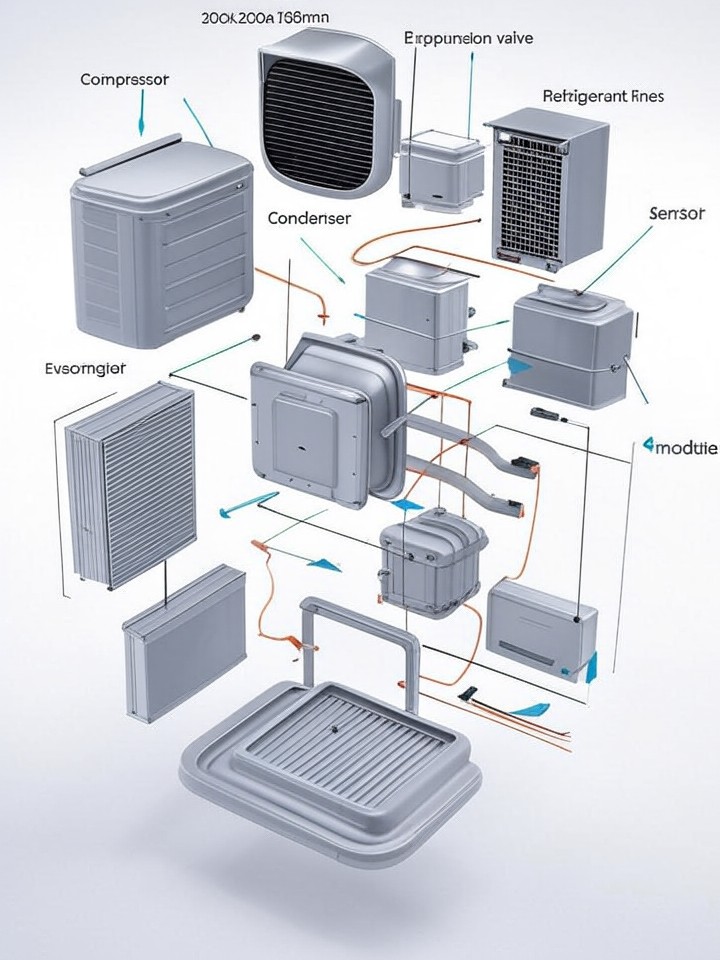
The Science of Heat Pump / AC Compressor Failure in Los Angeles
The heat pump in a Tesla Model S is a marvel of engineering, designed to both heat and cool the cabin efficiently using minimal energy. However, in Los Angeles’ extreme 90°F heat and relentless sun for 284 days a year, this system faces immense pressure, often leading to heat pump failure. Constant operation in such conditions can cause internal components to overheat or seize.
Similarly, the AC compressor, which pressurizes refrigerant to cool the cabin, can wear out from overuse in LA’s climate. Dust and debris from urban driving in areas like Downtown LA can clog the system, reducing efficiency. This isn’t just a comfort issue—it’s a critical system strain that risks further damage.
The unique challenge in Los Angeles is the combination of stop-and-go traffic on highways like the 405 and steep climbs in the Hollywood Hills. These conditions force the heat pump and compressor to cycle rapidly, accelerating mechanical wear. Over time, this leads to breakdowns costing thousands if not addressed early.
Common Symptoms of Failure
Recognizing the signs of heat pump or AC compressor failure in your Tesla Model S can save you from bigger headaches. Here are the most common symptoms to watch for in Los Angeles’ harsh climate:
- Weak or No Cooling: The cabin doesn’t cool down, even on max AC settings, especially noticeable in 90°F heat.
- Unusual Noises: Hearing a grinding or whining sound from the front of the vehicle, often indicating AC compressor strain.
- Error Messages: Dashboard alerts like “Climate Control System Requires Service” pop up, signaling heat pump issues.
- Inconsistent Heating: During rare cool LA nights, the cabin fails to warm up, pointing to heat pump failure.
- High Energy Consumption: Noticeable spikes in battery drain due to the system overworking to maintain cabin temperature.
These symptoms often worsen in heavy traffic or during long drives. Don’t ignore them—early action prevents costly repairs.
Diagnostic Steps: DIY vs Professional
Diagnosing heat pump or AC compressor issues in a Tesla Model S starts with basic checks. At home, look for error codes on the touchscreen and listen for unusual noises near the frunk. However, DIY efforts are limited without specialized tools.
Professional diagnosis, especially in Los Angeles repair shops, involves advanced equipment to read Tesla-specific thermal management codes. Technicians also perform refrigerant pressure tests, which aren’t feasible at home. This ensures accurate identification of the fault.
While DIY can spot surface issues, it risks missing deeper electrical faults tied to the onboard charger or dc-dc converter. With labor rates at $180–$240 per hour in LA, professional help is a worthwhile investment to avoid misdiagnosis and escalating costs.
OEM vs Aftermarket Parts for Tesla Model S
When repairing a Tesla Model S heat pump or AC compressor, choosing between OEM (Original Equipment Manufacturer) and aftermarket parts is critical. OEM parts, sourced directly from Tesla, guarantee compatibility with the vehicle’s Superbottle thermal system but come at a premium price. They’re ideal for maintaining factory performance.
Aftermarket parts can be cheaper, sometimes saving 20-30% on costs, but they may lack the precise engineering of Tesla components. In Los Angeles’ demanding conditions, a subpar part can fail faster, leading to repeat repairs. Always weigh the long-term value over initial savings.
Our recommendation? Stick with OEM for critical systems like the heat pump to avoid compatibility issues. Check Tesla’s official support page (tesla.com/support) for authorized part sources to ensure quality and safety.
Future Prevention Tips
Preventing heat pump and AC compressor failure in your Tesla Model S starts with regular maintenance. Schedule annual inspections to check refrigerant levels and clean the system, especially in dusty LA neighborhoods like Santa Monica. This minimizes strain on components.
Avoid overusing the climate control at max settings during peak heat—set it to a moderate level to reduce wear. Park in shaded areas or garages to lower cabin temperatures, easing the load on the AC compressor. Small habits make a big difference.
Lastly, stay updated on Tesla software releases, as they often include thermal management optimizations. For safety concerns related to HVAC failures, refer to resources like the NHTSA (nhtsa.gov). Proactive care keeps your Model S running smoothly in Los Angeles’ tough climate.